Gallstones: Symptoms, Risk Factors, and Treatment Options
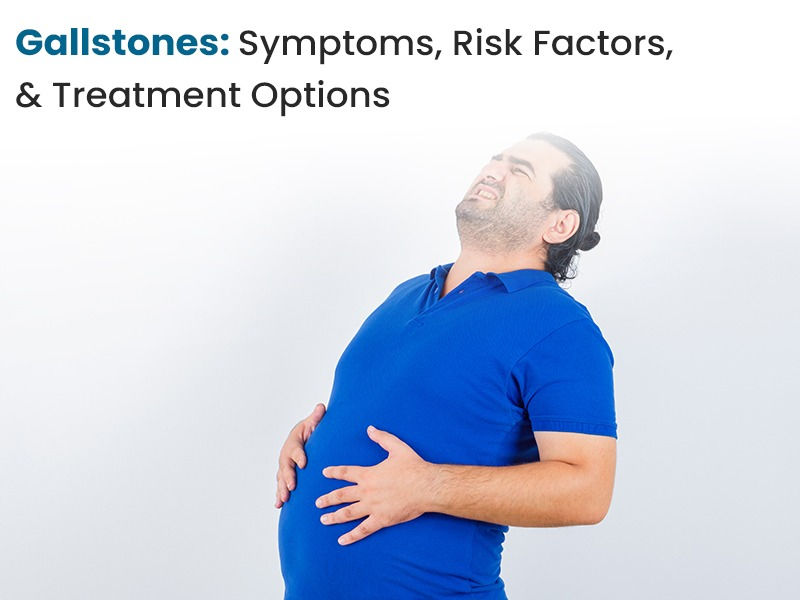
The human digestive system is a finely tuned machine, but a slight structural imbalance, like a tiny, hardened crystal, can disrupt the whole flow and cause significant discomfort.
While numerous people remain oblivious that they possess these "silent stones" throughout their lives, some might have a sudden pain so severe that they need a professional at a specialised hospital.
What Are Gallstones?
While it may be small, the gallbladder plays a vital role in helping your body process the food you eat.Your gallbladder is a tiny, pear-shaped organ on the right side of the abdomen, just under your liver. The primary function of the gallbladder is to store and concentrate bile, a liquid made by the liver to assist in the digestion of fats. It releases bile into the small intestine when you eat through small tubes called bile ducts.
Gallstones form when bile chemicals, such as cholesterol or bilirubin, become out of balance and crystallise into solid stones. The stones can be as small as a grain of sand or as large as a golf ball. Most stones do not cause symptoms, but they become a problem when they obstruct a bile duct, leading to biliary colic.
Principal Gallstone Types
Gallstones caused by cholesterol: These, which make up 80% of cases, are usually yellow and develop when bile has an excessive amount of undissolved cholesterol.
Pigment Gallstone: Pigment gallstones are black or dark brown stones that form when the bile has too much bilirubin, a byproduct of the breakdown of red blood cells.
Could You Be Dealing With Gallstones?
The majority of gallstones are essentially "silent" and don't lead to symptoms. But a stone that gets stuck in a duct can cause very sharp pain in the upper right or upper middle part of the stomach. Gallstone pain may last for a few minutes or a few hours, and it might be felt in the right shoulder or between the shoulder blades.
Apart from those, you might also notice these other digestive signs:
Nausea and vomiting
Indigestion
bloating, or frequent burping
Stools that are very pale and urine that is very dark
Itchy skin and a loss of appetite
Jaundice (yellowing of the skin or eyes) occurs if the bile duct is very tightly blocked
Recognising Risk Factors And Causes
While it remains a mystery why some people develop stones and others do not, several factors significantly increase the risk. They are three times as common among women as among men, particularly those over 40 years of age.
The table below shows the category with examples:
Category | Risk Factors |
Diet & Weight | Obesity, high-fat/low-fibre diets, and rapid weight loss. |
Medical Conditions | Diabetes, Liver Cirrhosis, Crohn’s disease, and IBS. |
Blood Disorders | Sickle cell anemia or Leukemia (increases bilirubin). |
Medications | Oral contraceptives or high-dose estrogen therapy. |
Risks Of Leaving Gallstones Untreated
Ignoring chronic symptoms can result in major health problems. You should see a Gastroenterologist in Jaipur right away if you have a fever, chills, or pain that lasts longer than eight hours.
Severe Inflammation: Acute cholecystitis, a condition characterised by permanent obstruction of the gallbladder, leading to inflammation and infection.
Acute Inflammation: When a stone obstructs the pancreatic duct, the pancreas becomes inflamed.
Gallbladder Cancer: While rare, chronic gallstones are a major risk factor.
Gallstone Obstruction: A rare condition where a stone creates a fistula (channel) and blocks the bowel.
Diagnosis And Testing Procedures
To verify the existence of stones, healthcare practitioners use different diagnostic tools:
Murphy's Sign Test: The doctor performs a physical examination and checks for pain while the patient takes a deep breath.
Ultrasound Scan: This is the usual non-invasive method to see stones.
MRI or CT Scans: These are used for detailed imaging in emergency or complicated cases.
ERCP: This is an endoscopic technique that can identify and remove stones from the bile ducts.
Current Gallstones Treatment Options
Treatment depends on the severity of the symptoms. If the stones are small and non-calcified, doctors may attempt oral dissolution therapy with ursodeoxycholic acid, although this treatment can last for years and is frequently unsuccessful.
Surgical Intervention. In the case of persistent pain, removing the gallbladder (cholecystectomy) is the gold standard treatment.
Laparoscopic (Keyhole) Surgery: A method most commonly used, involving small cuts and a short recovery time (approx. 10 days).
Open Surgery: If the gallbladder is severely inflamed or the patient is in the third trimester of pregnancy, then open surgery is necessary.
How To Prevent Gallstone Formation?
Age and genetics are beyond your control, but lifestyle decisions are crucial for prevention:
Keep Your Weight in Check: Steer clear of "crash diets" since they can lead to the development of stones.
Add fibre to your diet: Include whole grains, nuts, fruits, and vegetables in your high-fibre diet.
Frequent Meals: Bile becomes excessively concentrated when meals are skipped.
Conclusion
Choosing the right gastroenterology hospital is an important decision if one has a complicated digestive health issue and needs to recover smoothly. At Park Hospital, they offer the best specialist treatments, the most modern diagnostic tools, and the most advanced laparoscopic surgical facilities.
Moreover, their specialised Gastro hospital wing will provide personalised treatment and clinical excellence, whether you need a routine check, treatment for silent stones, or an emergency gallbladder operation. Abdominal pain is the thing you should not allow to control your life, let the experts heal your digestive system.


Comments